Knowing how to unclog a drain is one of the most useful skills a homeowner can have. A slow sink or a gurgling shower rarely needs an emergency plumber. In most cases, a few household items and about 20 minutes are enough to fix the problem.
In this guide on how to unclog a drain, you will learn seven proven methods, from the simplest to the most effective. You will also find tips to stop clogs from coming back, plus clear signs that it is time to call a professional.
Why Drains Clog in the First Place
Before you fix a clog, it helps to understand what causes it. Most blocked drains come from a slow build-up, not one big mistake. Over weeks and months, small amounts of waste stick to the inside of the pipe until water can barely pass.
- Kitchen sinks: grease, food scraps, coffee grounds and soap residue.
- Bathroom sinks: toothpaste, hair, shaving cream and skin products.
- Showers and tubs: hair and soap scum are the two biggest culprits.
- Toilets: too much paper or flushed items such as wipes.
Once you know the cause, you can pick the right fix. A grease clog needs heat and soap. A hair clog needs a tool that can grab it.
Tools You Need to Unclog a Drain
You do not need a full plumbing kit to learn how to unclog a drain at home. Most of these items are probably in your home already.
- A cup plunger (for sinks) and a flange plunger (for toilets)
- Baking soda, white vinegar and dish soap
- A kettle or large pot for boiling water
- A plastic drain snake or a metal drain auger
- A bucket, rubber gloves and an old towel
- Adjustable pliers for removing the pipe trap
How to Unclog a Drain: 7 Methods That Work
If you are wondering how to unclog a drain without calling a plumber, start with method one and work your way down the list. Each step gets a little more hands-on, so you only do the extra work if you need to.
1. Flush the Drain With Boiling Water
Hot water is the easiest first step for how to unclog a drain, especially for grease and soap clogs. Boil a full kettle of water. Then pour it slowly down the drain in two or three stages, waiting about 30 seconds between each pour.
Important: do not use boiling water on porcelain sinks or toilets, because the sudden heat can crack them. Do not use it on PVC pipes either, since very hot water can soften the joints. Use very hot tap water instead.
2. Use a Plunger the Right Way
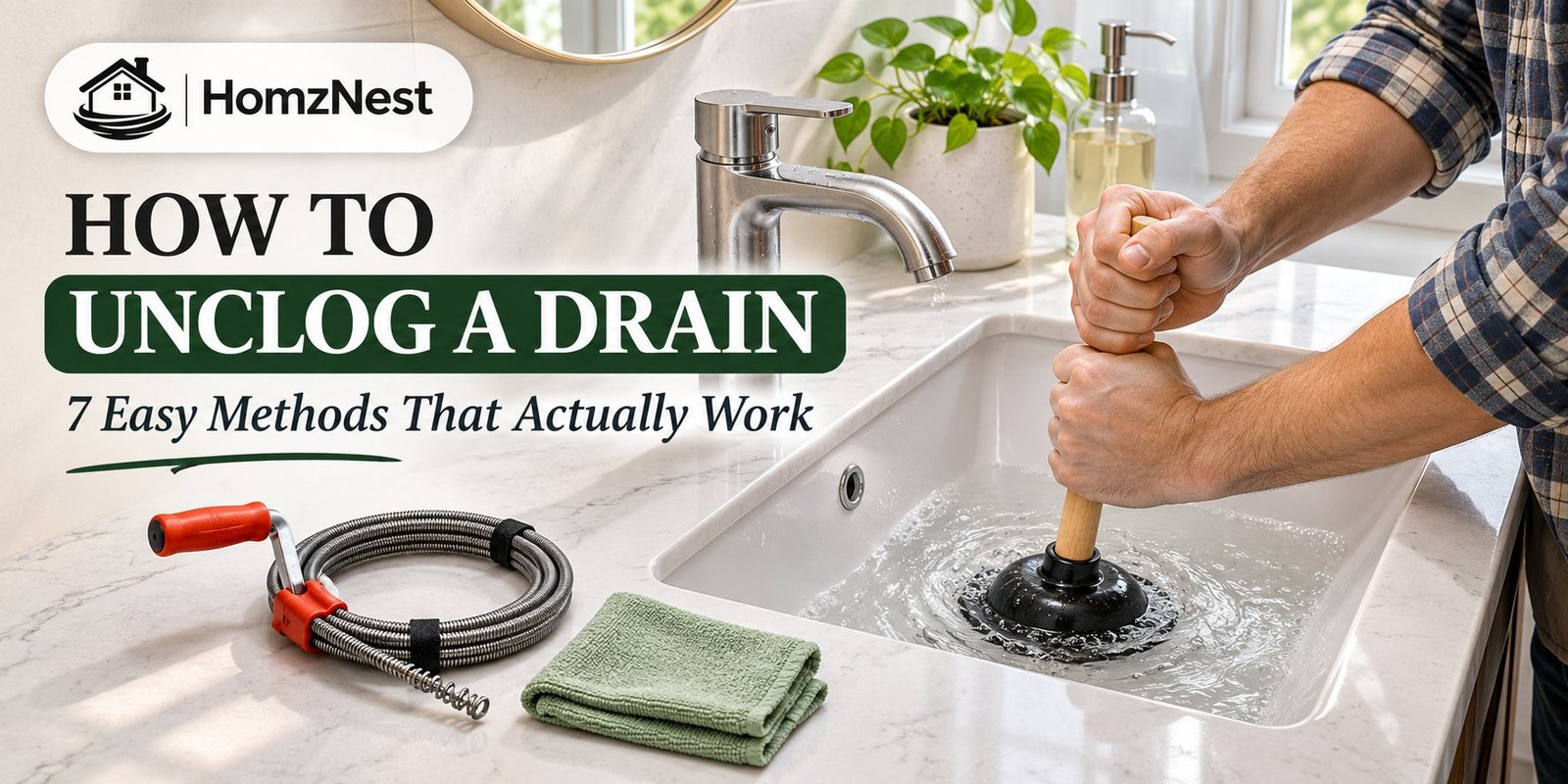
For many homeowners, this is the fastest way for how to unclog a drain in a bathroom or kitchen. A plunger works by pushing and pulling pressure through the pipe, which breaks the clog loose. Many people use it wrongly, so follow these steps:
- Remove the drain stopper and block any overflow hole with a wet cloth.
- Add enough water to cover the plunger cup.
- Press the plunger firmly over the drain to form a tight seal.
- Pump up and down quickly for 15 to 20 seconds.
- Pull the plunger away sharply. If the water drains, you are done.
3. Try Baking Soda and Vinegar
This classic mix is gentle on pipes and safe for most homes. It works best on light clogs and bad smells.
- Pour half a cup of baking soda straight into the drain.
- Add half a cup of white vinegar and cover the drain with a plug.
- Wait 15 to 30 minutes while the mixture fizzes.
- Flush with hot water.
4. Dish Soap and Hot Water for Grease
If the kitchen sink is slow, grease is the likely cause. Squirt a generous amount of dish soap into the drain, then follow it with a pot of very hot water. The soap helps break up the fat so it can wash away.
5. Clear It With a Drain Snake
When the clog is deeper, a drain snake (also called an auger) is the best tool. It reaches past the trap and either breaks up or pulls out the blockage.
Feed the end of the snake into the drain until you feel resistance. Then turn the handle to hook the clog. Pull the snake back slowly and remove whatever comes out, which is often a clump of hair. Run hot water for a minute when you finish.
6. Remove and Clean the P-Trap
The P-trap is the U-shaped pipe under your sink. It catches debris, so it is a very common clog spot. Place a bucket underneath, then loosen the two slip nuts by hand or with pliers. Slide the trap off and empty it into the bucket.
Rinse the trap, check the pipe ends for build-up, and reconnect everything. While you are under the sink, look for drips around the joints. If you spot any, our guide on how to fix a leaky faucet will help you tackle the next repair.
7. Use a Wet/Dry Vacuum
A wet/dry vacuum can pull a stubborn clog out from the drain opening. Set it to liquid mode, seal the hose tightly over the drain with a rag, and run it for a few seconds. This is a good backup method when a plunger fails.
Should You Use Chemical Drain Cleaners?
Chemical cleaners are sold in every hardware store, but they should be your last choice, not your first. Drain cleaners often contain strong acids or alkalis that can damage older pipes, harm your skin and release dangerous fumes.
If you do use one, follow these safety rules:
- Wear gloves and eye protection, and open a window.
- Never mix two different cleaners together.
- Never use a plunger after pouring in a chemical, because the liquid can splash back.
- Tell any plumber what you used before they start work.
How to Prevent Clogged Drains
Once you know how to unclog a drain, keeping it clear is easy. Prevention is far cheaper than repair. A few small habits will keep your pipes clear all year.
- Use drain strainers in the kitchen sink, shower and tub to catch hair and food.
- Never pour grease down the sink. Let it cool, then throw it in the trash.
- Flush weekly with very hot water to melt early build-up.
- Do a monthly baking soda and vinegar treatment to keep smells away.
- Only flush toilet paper. Wipes and paper towels do not break down.
Water-saving habits help too. The EPA WaterSense program has practical tips for using less water, which also puts less strain on your plumbing. For more maintenance ideas, read our complete guide to home improvement tips.
When to Call a Professional Plumber
Even the best way to unclog a drain will not fix every problem. DIY methods solve most clogs, but some problems are bigger than a single drain. Call a licensed plumber if you notice any of these signs:
- Several drains in the house are slow or blocked at the same time.
- Water backs up into a tub or shower when you flush the toilet.
- You hear gurgling sounds from different fixtures.
- A bad sewage smell comes from the drains.
- The clog keeps returning after you clear it.
If you cannot find how to unclog a drain with simple tools, these signs often point to a main sewer line problem, tree roots or a damaged pipe. Fixing a hidden leak early also protects your floors and walls. If the problem is in your bathroom, you may also want to read how to waterproof a bathroom and avoid water damage.
Frequently Asked Questions
How long does it take to unclog a drain?
Most simple clogs take 10 to 30 minutes with a plunger or a baking soda treatment. A snake or P-trap cleaning may take up to an hour.
Is baking soda and vinegar really effective?
It works well for light build-up, grease films and odors. For solid clogs like hair or objects, a plunger or snake is more reliable.
Can I use boiling water on every drain?
No. Avoid boiling water on PVC pipes, porcelain sinks and toilets. Very hot tap water is a safer choice.
What is the safest way to unclog a drain?
Hot water, a plunger and a baking soda mix are the safest options. These gentle methods are the best place to start when you need to unclog a drain at home. They protect your pipes and your skin.
Why does my drain keep clogging?
A repeat clog usually means the blockage is deeper in the line or the pipe has a build-up on its walls. A professional camera inspection can find the exact cause.
Final Thoughts
Learning how to unclog a drain saves you money, time and stress. Begin with the gentle methods, move to a plunger or snake if needed, and keep chemicals as a last resort. With strainers and a little regular care, you can avoid most clogs altogether.
Now that you know how to unclog a drain, keep a plunger and a drain strainer handy so the next slow sink is a quick fix. A well-maintained plumbing system also protects your property. Small upgrades and repairs add up, as you can see in our list of ways to increase your home value.