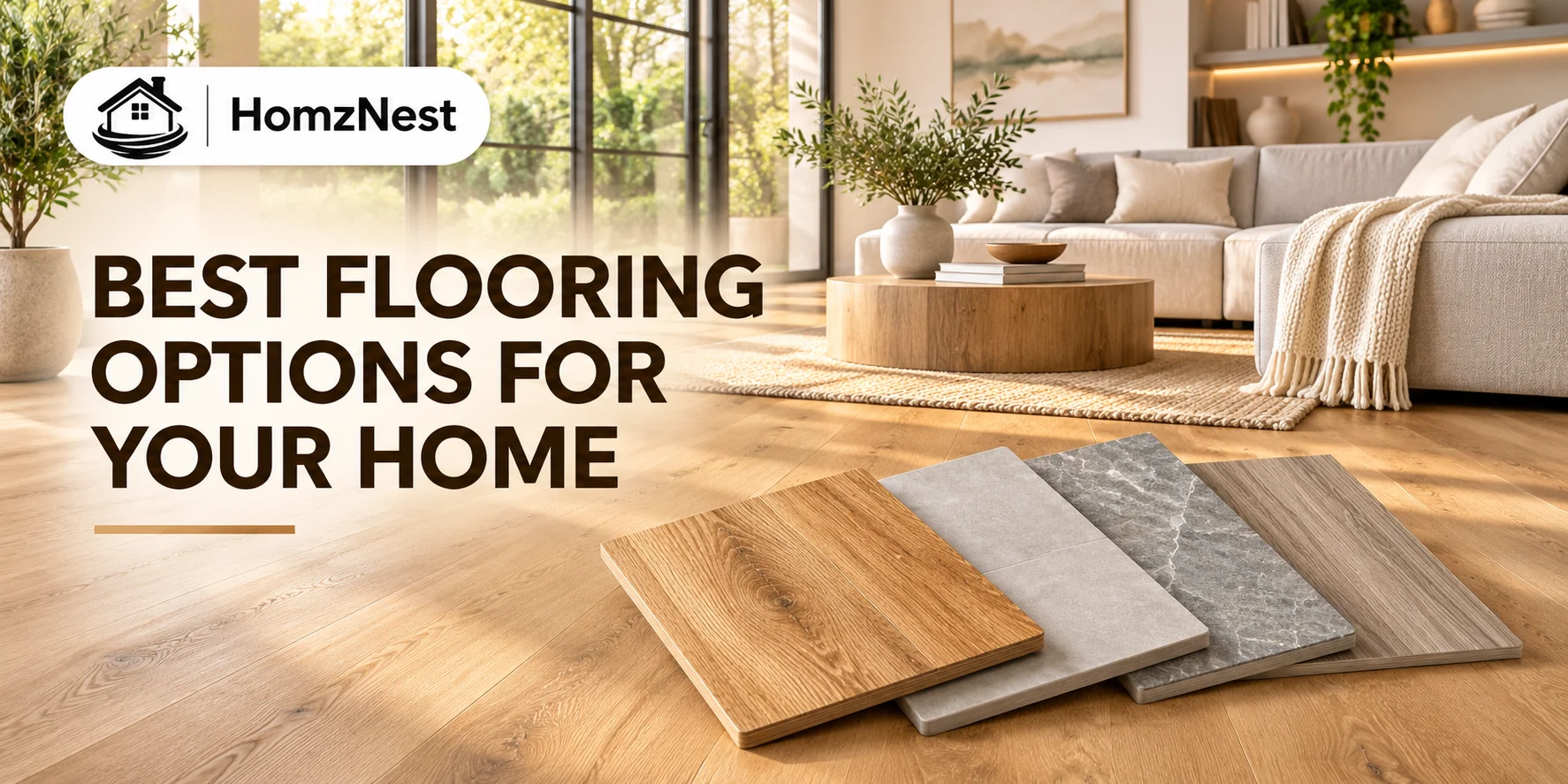
Choosing the best flooring options for your home is one of the biggest decisions in any renovation. Floors affect how a room looks, how it feels underfoot, how much upkeep it needs, and even how much your home is worth. With so many materials on the market, it is easy to feel overwhelmed by the best flooring options available. This guide compares seven popular types so you can pick the right one for your budget, lifestyle, and space.
Flooring is also one of the upgrades buyers notice first. If resale matters to you, our list of smart upgrades that increase home value shows where your money works hardest.
What to Consider Before Choosing the Best Flooring Options
Before comparing the best flooring options in detail, think through these factors. They narrow your choices quickly.
- Budget: Include the cost of the material, underlayment, installation, and removal of old flooring.
- Moisture: Kitchens, bathrooms, and basements need water-resistant materials.
- Foot traffic: Busy hallways and entryways need a durable surface.
- Kids and pets: Scratch resistance and easy cleaning matter more in family homes.
- Comfort and noise: Softer floors feel warmer and absorb sound better.
- Maintenance: Some floors need refinishing or sealing, while others only need sweeping.
7 Best Flooring Options for Your Home
1. Hardwood Flooring
Hardwood is a timeless choice known for warmth and character. It can be sanded and refinished several times, so a well-kept floor can last for decades. It does not handle moisture well, so avoid it in bathrooms and damp basements. The National Wood Flooring Association offers useful installation and care guidance at nwfa.org.
- Best for: Living rooms, bedrooms, and dining areas
- Pros: Long lifespan, adds value, can be refinished
- Cons: Higher cost, scratches and dents, sensitive to water
2. Engineered Wood Flooring
Engineered wood has a real wood veneer on top of a layered plywood core. It handles humidity changes better than solid hardwood, which makes it more stable. It can usually be installed over concrete slabs and in more rooms.
- Best for: Homes in changing climates, apartments, and basements with moisture control
- Pros: Real wood look, more stable, wide range of finishes
- Cons: Can only be refinished a limited number of times
3. Luxury Vinyl Plank (LVP)
Luxury vinyl plank has become one of the most popular choices because it is affordable, waterproof, and realistic-looking. Modern LVP mimics wood and stone convincingly, and many products click together for easy DIY installation.
- Best for: Kitchens, bathrooms, basements, and rental properties
- Pros: Waterproof, durable, budget-friendly, simple to install
- Cons: Cannot be refinished, and cheaper products can dent or fade
4. Laminate Flooring
Laminate uses a photographic layer over a fiberboard core with a protective wear coating. It resists scratches well and costs less than hardwood. Standard laminate is not fully waterproof, although water-resistant versions exist.
- Best for: Bedrooms, offices, and living areas on a budget
- Pros: Affordable, scratch-resistant, easy to install
- Cons: Swells if soaked, cannot be refinished
5. Ceramic and Porcelain Tile
Tile is tough, water-resistant, and available in nearly endless styles. Porcelain is denser and more moisture-resistant than standard ceramic. Tile feels cold underfoot, but it works well with radiant heating. If you are tiling a wet room, read our guide on how to waterproof a bathroom first so the surface below the tile is protected.
- Best for: Bathrooms, kitchens, laundry rooms, and entryways
- Pros: Very durable, water-resistant, easy to clean
- Cons: Hard and cold, grout needs sealing, installation is more demanding
6. Carpet
Carpet is soft, quiet, and comfortable, which makes it a good fit for cozy spaces. Modern synthetic carpets resist stains better than older types, but they still trap dust and allergens. The EPA’s page on indoor air quality explains how flooring and cleaning habits affect the air in your home.
- Best for: Bedrooms, nurseries, and basements that stay dry
- Pros: Warm, soft, good sound absorption
- Cons: Stains, holds allergens, wears faster in busy areas
7. Bamboo and Cork
These natural materials are popular with eco-conscious homeowners. Bamboo is a fast-growing grass that creates a hard, wood-like surface. Cork is naturally cushioned, warm, and quiet, though it needs a good sealant.
- Best for: Eco-friendly homes, home offices, and playrooms
- Pros: Renewable materials, unique look, comfortable (cork)
- Cons: Can scratch or fade, quality varies by brand
Best Flooring Options Comparison at a Glance
| Flooring Type | Typical Cost | Durability | Water Resistance |
|---|---|---|---|
| Hardwood | High | Very high | Low |
| Engineered wood | Medium to high | High | Medium |
| Luxury vinyl plank | Low to medium | High | Very high |
| Laminate | Low | Medium | Low to medium |
| Tile | Medium to high | Very high | Very high |
| Carpet | Low to medium | Low to medium | Low |
| Bamboo and cork | Medium | Medium | Low to medium |
Use this table to narrow down the best flooring options for your needs before you visit a showroom. Costs vary by region, brand, and installation, so always get several quotes before you commit.
Best Flooring Options by Room
- Kitchen: Luxury vinyl plank or porcelain tile handle spills and heavy use.
- Bathroom: Porcelain tile or waterproof vinyl are the safest picks.
- Living room: Hardwood or engineered wood add warmth and value.
- Bedroom: Carpet or laminate keep the space quiet and comfortable.
- Basement: Luxury vinyl plank or tile resist moisture.
- Entryway: Tile or vinyl stand up to dirt and wet shoes.
Remodeling the kitchen at the same time? Our small kitchen remodel on a budget guide shows how to coordinate flooring with cabinets and counters without overspending.
Tips for Installing Your Best Flooring Options
Whichever of the best flooring options you choose, a little planning keeps the project on time and on budget.
- Measure carefully and order about 10 percent extra for cuts and waste.
- Let planks acclimate in the room for the time the manufacturer recommends.
- Prepare the subfloor so it is clean, flat, and dry.
- Paint the walls before installing new floors, or protect the floor if you paint afterward. See our guide on how to paint a room for a clean finish.
- Compare warranties, especially wear-layer and water-damage coverage.
For more renovation planning ideas, browse the complete home improvement tips guide. If you want to cut energy costs while you upgrade, the U.S. Department of Energy’s Energy Saver site has practical advice on insulation and efficiency.
Frequently Asked Questions
What are the most durable flooring options?
Porcelain tile and quality hardwood are among the most durable. Luxury vinyl plank also holds up very well in busy homes.
What is the cheapest of the best flooring options?
Laminate, basic vinyl, and some carpets are usually the lowest-cost options, especially for DIY installation.
What are the best flooring options for pets?
Among the best flooring options for pets, luxury vinyl plank and tile resist scratches and accidents, so they are popular with pet owners.
Which flooring adds the most value?
Hardwood and engineered wood tend to appeal most to buyers, though the return depends on your local market.
Can I install new flooring over old flooring?
Sometimes. Click-lock vinyl and laminate can often go over a flat, sound surface, but check the manufacturer’s instructions first.
Final Thoughts
The best flooring options depend on how you live. Choose tile or luxury vinyl plank for wet areas, hardwood or engineered wood for living spaces, and carpet or laminate where comfort and budget come first. Match the material to the room, compare the best flooring options on long-term cost, and you will end up with floors you love for years.